Upsilon Alumni Association — Sigma Pi Upsilon Chapter
Menu

Author: Bradley Reichard

  • Adytum – Jack Crickard

    Adytum – Jack Crickard

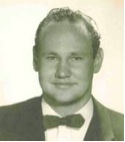
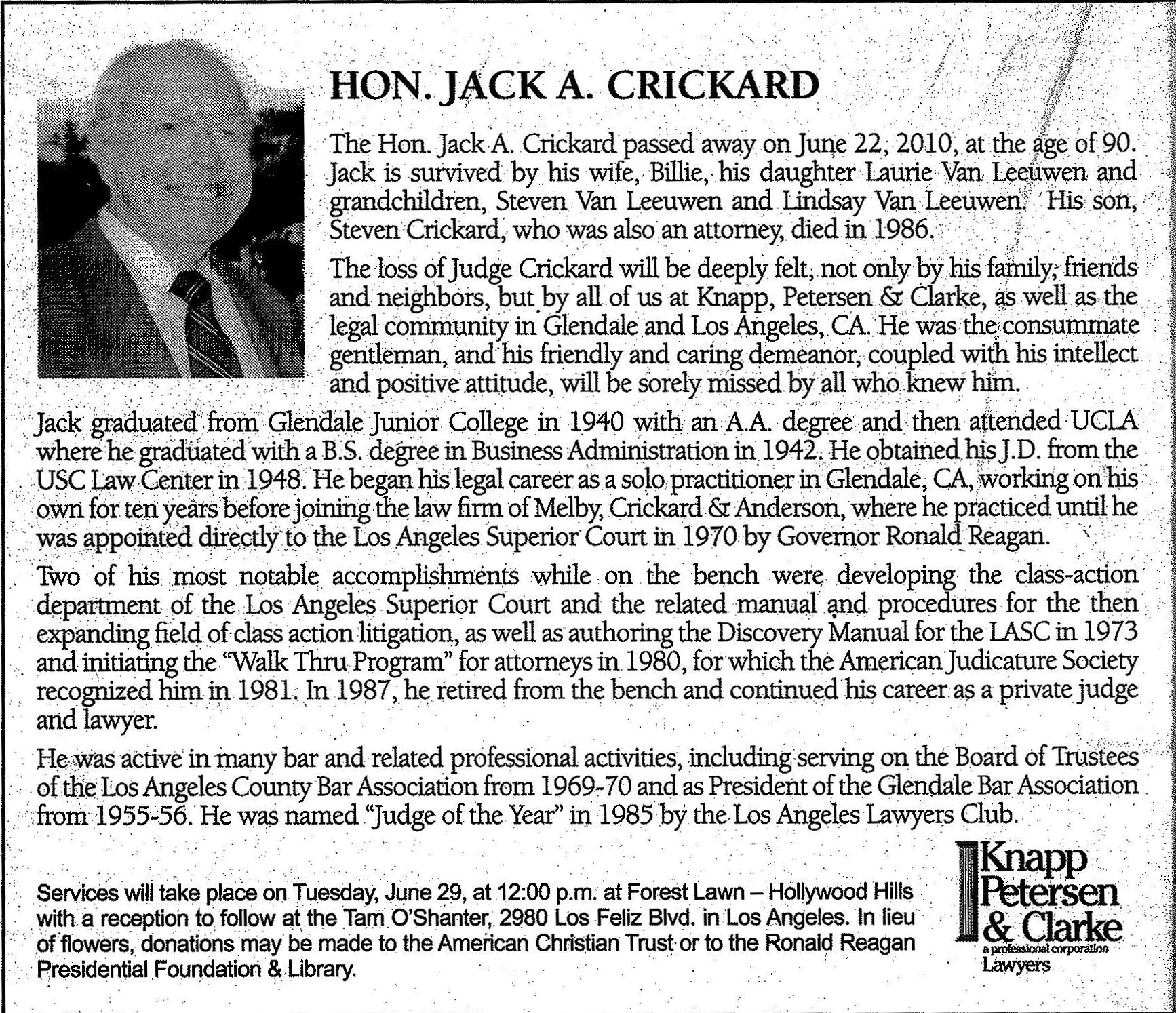
    John (Jack) Crickard, a retired Los Angeles Superior Court Judge and one of the oldest Upsilon alumni, died in June at age 90. He was a highly regarded attorney and lived the fraternity’s ideal of advancing truth and justice. The following obituary was printed in the Daily Journal, the Los Angeles-area legal newspaper.

    June 28, 2010

    JACK A. CRICKARD
    By Pat Alston Daily Journal Staff Writer
    LOS ANGELES – Services for retired Los Angeles County Superior Court Judge Jack A. Crickard, whose “love and passion” for the law drew young attorneys to him well into his late 80s, will take place Tuesday at Forest Lawn Memorial Park, Hollywood Hills.
    Crickard, a nearly lifelong Glendale resident, died of a stroke Tuesday at Glendale Adventist Medical Center, according to his daughter, Laurie Van Leeuwen of Glendale. He was 90.
    Until a few months ago, Crickard spent several hours a day, four days a week, at an office provided to him by Glendale’s Knapp, Petersen & Clarke.
    “He had an open-door policy,” said Kevin J. Stack, one of the firm’s directors. “He would welcome anyone … if they had questions.”
    Stack was a law-school classmate and friend of the retired judge’s son, Steven P. Crickard, who died in 1986.
    Jack Crickard also offered attorneys at the firm mandatory continuing legal education training sessions, Stack said.
    “He exhibited such a love and passion for the law,” the attorney said. “He spent a lot of time … providing guidance to other lawyers.”
    Born in Marion, Ohio, Crickard was 3 when his family moved to Glendale. He received his undergraduate degree in business administration from UCLA, where he was a brother in the Sigma Pi fraternity’s Upsilon chapter, and his law degree from USC in 1948.
    Crickard spent the first 10 years of a general civil practice as a sole practitioner before joining Melby, Crickard & Anderson. Then-Gov. Ronald Reagan appointed him to the Superior Court in 1970.
    During his 17 years on the bench, Crickard developed two programs: one to address the rapidly expanding area of class actions and the second to help new lawyers navigate the unfamiliar waters of civil litigation.
    He developed the court’s manual for dealing with class actions and started the Saturday morning “walk-thru” program for fledgling civil lawyers.
    One of the most rewarding aspects of his work on the bench was helping settle civil disputes before, or even during, trial, he told the Daily Journal in 1982.
    “I’ll discuss settlement if there’s any spark of hope,” he said.
    After his retirement in 1987, he returned to the practice of law and worked as a private judge.
    “He was such a caring and gentle person,” Stack said.
    As a judge and a lawyer, he exuded “an air of civility,” Stack said. “He had a strong intellect, but he made everyone feel comfortable.”
    In addition to his daughter, Crickard is survived by his wife, Billie, and two grandchildren, Steven Van Leeuwen of Pasadena and Lindsay Van Leeuwen of Brentwood.
    The service will begin at noon at the Old North Church at Forest Lawn, 6300 Forest Lawn Drive, Los Angeles 90068. A reception will follow at Tam O’Shanter, 2980 Loz Feliz Blvd., Los Angeles 90039.
    Instead of flowers, donations may be made to the American Christian Trust, 241 Palos Verdes Drive West, Suite 201, Palos Verdes Estates 90274, or the Ronald Reagan Presidential Foundation and Library, 40 Presidential Drive, Simi Valley 93065
  • Sigma Pi World Series 2010

    Sigma Pi World Series 2010

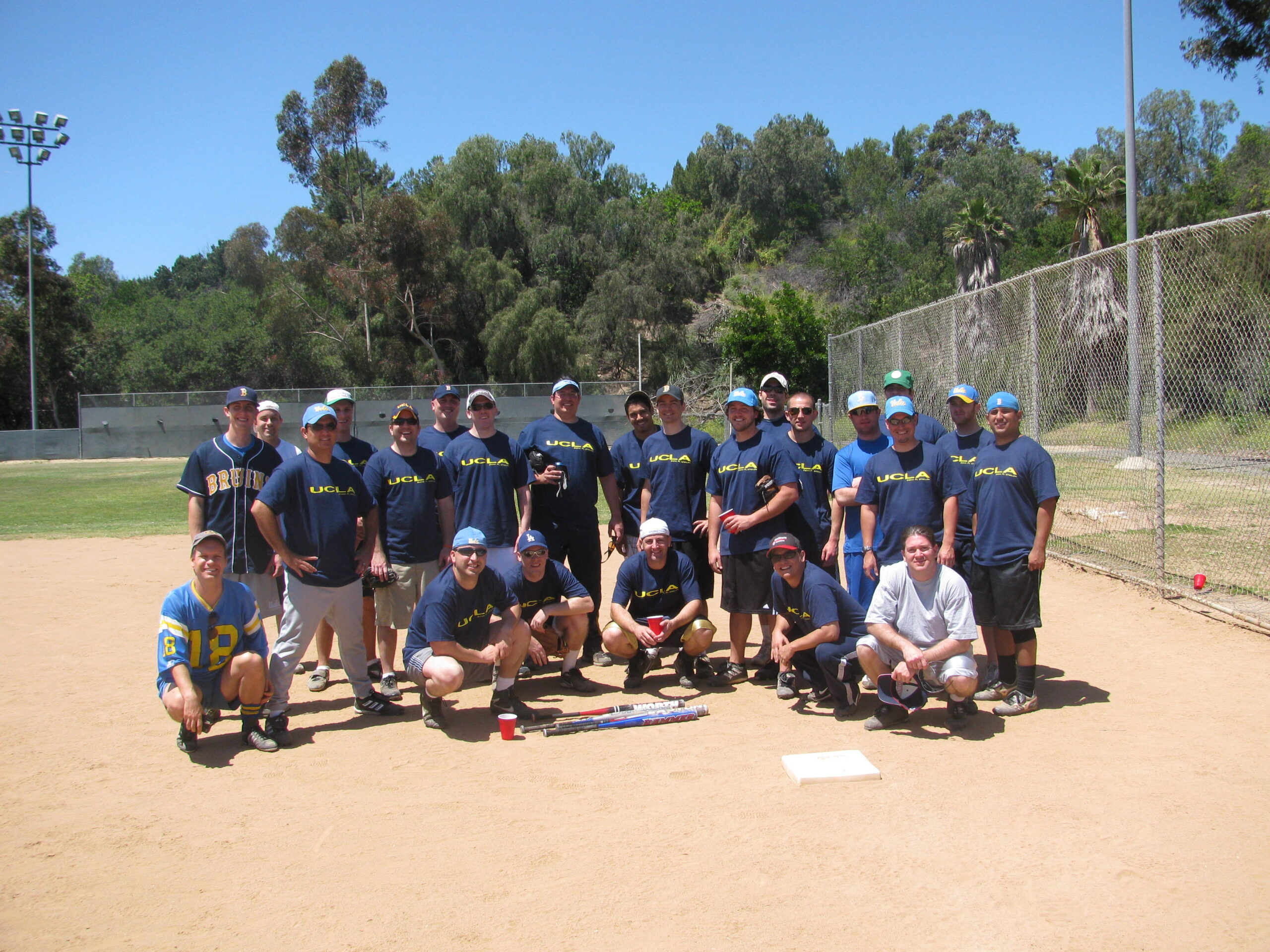
    FULLERTON – Upsilon had a rough outing at the Sigma Pi Western World Series in May and failed to reach the playoffs. The Blue team (old alumni) lost all 3 games, and the Gold team (young alumni) won 1 game, which was against the Blue Team.

    Manager Dan “Pudge” Romero deserves much credit for motivating enough alumni for two teams, for the first time in many years. The active chapter also played for the first time in three years.

    Adam Hunt flew in from New York City, where he really lives on Wall Street and works in finance, on a home-scouting trip to Orange County. OF Blayne Kercher, who played on the Bruin club baseball team, and 3B Fletcher Riehl, a real estate financial analyst, were impressive in their alumni debuts. StalwartsDrew Mercado and Tony Lopez continued their traditional strong play.

    Gold (young alumni) 13, Blue (old alumni) 4: Fletcher Riehl hustled home to score from second base on a sacrifice fly for a 1-0 lead for Gold. Drew Mercado had a double and 3 RBI. Ryan Formanek was 1-for-2 with 1 run and 1 RBI. Ken Stout was 2-for-3 with 2 RBI. Josh Speidel was 2-for-3 with 1 run and 1 RBI. For Blue, Nick North was 2-for-3 with an RBI double. Manny Alamillo tripled and had 2 RBI.

    BLUE TEAM

    Long Beach St. 29, Blue 4: Upsilon was wiped out, rallying for 4 runs in the 5th inning. Jeff Brown went 2-for-3 with 2 RBI. Kevin Rodriguez singled home a run. Dave Canty went 1-for-3 and scored a run. Dustin Beckley went 2-for-2 and scored a run.

    Dominguez Hills 7, Blue 6: Upsilon allowed 1 run to score in the bottom of the 7th inning that broke a 6-6 tie, leaving Blue winless. David Canty hit a 2-run home run in the 3-run 6th inning that had tied the score. A.J. Espinoza it an opposite-field triple and went 2-for3. Jeff Brown scored 2 runs. Nick Northhad an impressive assist to throw out a runner at home plate. Abel Somilledaand Kevin “K-Rod” Rodriguez each went 2-for-3.

    GOLD TEAM

    Arizona 12, Gold 9: Upsilon rallied but could not overcome a 6-run deficit.Ryan Formanek homered and Fletcher Riehl tripled and scored in the 5thinning to pull within 3 runs. Blayne Kercher went 2-for-2 with 2 RBI, and he had two great assists from left field, throwing out a runner on first base and nailing a throw to prevent a run from scoring in the 5th inning. Formanek also nailed a runner at second base from right field. Drew Mercado was 2-for-2 with 2 RBI.

  • Why Are People Racist? by Andrew Guilford ’72

    Why Are People Racist? by Andrew Guilford ’72

    guilford1MARCH 2, 2010 | PERSPECTIVE
    Why Are People Racist?

    By Andrew Guilford
    Do people change their core values? Do nations? This crucial question confronts many, ranging from national leaders signing treaties or passing laws, to general managers for sports teams considering a trade for a recognized troublemaker, to judges imposing sentences. This issue of changing values permeates a new book from Justice Eileen Moore, “Race Results, Hollywood vs. the Supreme Court, Ten Decades of Racial Decisions and Film” (Cool Titles, 2010), as it explores the impact of the film industry and the judicial system on race relations in America since the advent of movies. Like many growing up in the 1950s, Justice Moore observed firsthand irrational racism in people she loved. As we all should, Justice Moore looks over that shocking part of our American history, asking why the evil exists, and how the evil can be corrected. Why are people racist? And how has our nation moved beyond that evil, even to the election of a black president? Answers might be found in disciplines like economics, history, psychology, or philosophy. Justice Moore finds intriguing answers in a legal/sociological review of two major institutions in our country: the U.S. Supreme Court and the film industry. She concludes that over the years, our Supreme Court has helped improve race relations, but for too long and too often, our film industry has promoted racial stereotypes and harmed the cause of racial justice. A key part of her thesis is her surprise that the Supreme Court, which she believes many find to be conservative, would have a better record on race than the film industry, which she believes many find to be liberal.
    The premise of the book that institutions can change individual and societal values is extremely important. Many would find it not surprising that the branch of our government specifically assigned the duty of protecting minority rights has led the way in establishing racial justice. It is also reassuring that other institutions have been powerful forces for racial justice. With some unfortunate exceptions, this includes churches and their leaders. Indeed, the Civil Rights Movement was led by a man of God, possibly the greatest American of the last century, the Reverend Dr. Martin Luther King Jr.
    Sports are also a powerful force shaping the hearts and minds of Americans. Jackie Robinson obviously had a huge impact on the integration of blacks into baseball and American society, and should be considered the most influential athlete of the last century. Americans recently saw a strong statement for civil rights when we witnessed Americans of diverse colors, genders, and orientations win medals at the Winter Olympics.
    As noted by Justice Moore in her book, the integration of the armed services by President Harry Truman was another important step forward in shaping our views. This elevates President Truman as one of our great presidents, and the armed services as a potential force for needed social change.
    So, institutions can and have changed the values of people and nations, of Americans and America. Justice Moore’s review of countless movies and cases provides insights into how change may come. She does a fine job of documenting the failings of the movie industry. Her review begins with the shocking and unforgivable racism of the 1915 blockbuster “Birth of a Nation.” Another blockbuster decades later, “Gone With the Wind,” also is attacked by Justice Moore for its racism and elevation of the antebellum south as an idyllic land where blacks happily embraced slavery. That is followed by heaps of other movies presenting racist, stereotypic images of blacks, and a picture of a highly segregated America. This is attributed largely to the “southern box office” notion that financial success required pandering to southern racism.

    Reviewing the 1960s, Justice Moore describes the synchronization of films with Supreme Court decisions of that decade: “To Kill a Mockingbird” and Gideon v. Wainwright; “In the Heat of the Night” and Heart of Atlanta Motel v. United States; “A Raisin in the Sun” and the restrictive covenant cases like Shelley v. Kraemer; “Lawrence of Arabia” and Katzenbach v. McClung; and “Guess Who’s Coming to Dinner” and Loving v. Virginia. But when the Civil Rights Movement left the rural South and arrived in large northern urban areas, she says Hollywood changed tactics as the country met face to face with busing in Swann v. Charlotte-Mecklenburg Board of Education, with affirmative action in Griggs v. Duke Power Co., and with quotas in Fullilove v. Klutznick. At that point, when the middle class fled big cities and watched television in the suburbs, she says the film industry seduced white audiences back to movie theaters with films associating blacks with crime, seemingly validating white fears and frustrations. This cynical strategy continued into more recent times with “Blaxploitation” movies and their heavy emphasis on racy racism, and use of sex and violence as the major themes. Justice Moore properly provides scathing reviews of these movies.
    With the many movies mentioned in the book, it’s not surprising that some will take issue with some of the negative reviews. I dissented on occasion when some of my favorite flicks were panned. For example, a negative comment by a gangster about blacks in the classic “Godfather” may be beyond reproach as an accurate and necessary depiction of the racism of some immigrant Italians. And racist statements from despicable people might have the positive effect of branding racism as despicable. Also, although in “Glory,” a white officer is placed above blacks in the ranks, overall the movie delivers a powerful message of racial equality and the character and courage of black Union soldiers.
    Likewise, Justice Moore’s reviews force us to consider whether depicting all-white scenes is racist, or instead sometimes beyond reproach as a simple sad statement about a segregated America. Or whether it’s wrong to present Alice Walker’s negative portrayals of every major male black character in “The Color Purple.” Regardless, Justice Moore’s highly sensitive reviews of countless movies should heighten our awareness of racism in movies. It should also inspire us to consider how racist movies have slowed the necessary change in American values as we move toward racial justice.
    Justice Moore shows that our Supreme Court is a much more positive force in changing our values toward racial justice during the times that movies have been part of our culture. Key Supreme Court cases are presented along the way, and they are usually much more racially enlightened than movies of the same period.
    A key case in the middle of the century, of course, is Brown v. Board of Education. Outlawing segregation destroyed the separation that allows false stereotypes to continue. Those pessimistic about whether people or nations can change should compare the South of the 1960s with a nation now led by a black president. Brown was a necessary part of that movement.
    Other positive trends in Supreme Court history are reviewed, including cases on housing, employment, voting rights, busing, miscegenation, jury selection, criminal procedure, access to public accomodations, and affirmative action. While some may dispute some of the legal interpretations in the book, the dialogue promoted by dissent is productive. And of course, the Court’s record on race is far from perfect, even to this day. Justice Moore points out these shortcomings while generally noting that even when the Court was bad, Hollywood was worse.
    Beyond lofty ideas of changing hearts and minds, “Race Results” gives us a delightful compendium of movies, their plots, and their characters. Justice Moore covers the Top 100 American movies selected by the American Film Institute, the annual winner of the Oscar for Best Picture, and all of Alfred Hitchcock movies. Even movies without racial significance are briefly discussed in thorough footnotes. Although an index would be helpful, the book’s decade-by-decade organization makes facts readily accessible. Movie lovers should have fun with the book.
    Dr. King said, “The arc of the moral universe is long but it bends toward justice.” Justice Moore’s book reminds us that our institutions can make that arc shorter and more acute by changing our hearts and minds. She inspires us to work through institutions like the courts and Hollywood, and churches and sports, and so many others, to make that happen.
    Andrew J. Guilford is a United States District Judge.

  • UAA Update

    UAA Update

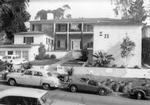
    thu_house50s1The UAA has been very active in programming events for the chapter, and we have funded many items for the chapter this year. We have 70 dues-paying members in 2009, one of our best years. I fully expect us to win our 2nd “Alumni Club of the Biennium” at the Convocation this summer in Boston.

    Your donations make it possible – thank you!

    $50 for Golden Crosses for alumni from 1959.

    $100 for travel scholarship for Sigma Pi University in June at National Headquarters in Nashville.

    $100 for new heraldry equipment (Sigma Pi banners, tablecloth for E.C. table, American flag).

    Thank you to movie mogul David DeCamp for raiding the Sony prop warehouses and providing a parchment role, stylus, sword, staff, sceptre, goblet, and fireplace andirons.

    $200 for donation to actives’ half-marathon philanthropy fundraiser, UCLA Santa Monica Rape Treatment Center.

    $200 for D’Avanzo and Meyer scholarships.

    $225 for framing of old photographs (including a donated Varsity Crew photo from David Lilly).

    $250 for Brooks Brother ties for former Sages upon end of term.

    $300 for annual dues to National.

    $400 for photos, furniture, landscaping (trees, roses).

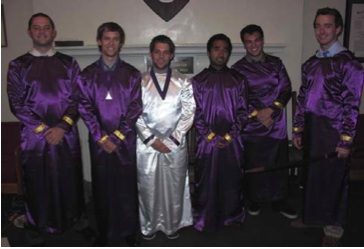
    $700 for new robes for Executive Council (see above photo).

    Future purchases: Full electrical upgrade (new panel), laser printer for house operations, heavy-duty benches and tables for the patio to create gathering places, treewells and planters for back.

  • Active Chapter

    Active Chapter

    ec_2010
    3rd Coun. Stephen Tye, 4th Coun. Mitch Howard, Sage Manuel Gouveia, 2nd Coun. Kanishk Tulsyan, Herald Martin Vigodnier, 1st Coun. Kevin Monte.

    Within the brotherhood, there have been numerous instances of achievement. Sam Cortina, a recent graduate in 2009, remains abroad in the Virgin Islands serving as an English instructor for young children. He has been accepted to Harvard Law.

    A senior, David Park, was afforded the opportunity to work out for the UCLA men’s basketball team after being recruited by assistant coaches while playing in the John Wooden Center.

    Senior Kevin Monte, has started at two premier internships, with the Los Angeles Clippers and with financial investment company Northwestern Mutual. The Northwestern internship has been rated as a top 10 internship in the entire nation over the last 5 years.

    Harrison Flanagan, a 2009 graduate, is beginning his law career at UC Hastings along with alumnus Case Colaw.

    Evan Hou, a 2009 graduate, was hired for a prominent actuarial position in a high profile insurance company.

    The Chapter remains competitive in Intramural Sports and on-campus activities. The football and soccer teams in the Fall made a substantial run into playoffs. Following Fall finals, the chapter still maintains a high overall GPA.

    The Chapter has varied and enjoyable social interactions with many top sororities. These exchanges, numerous brotherhood events, and socials involving the UCLA campus population have brought much excitement to the chapter.

    The brothers have committed to many philanthropic events by continuing the organization of marathon runners for a substantial donation to the UCLA Santa Monica Rape Treatment Center.

    Recently, the Chapter organized a creek cleanup of trash and debris at Stone Canyon Creek on campus.

    We still remain a relevant and successful chapter in and around the UCLA community. Thank you  again to all the alumni who have afforded us this opportunity to carry on the traditions of the Sigma Pi brotherhood at UCLA.

    – Kevin Monte, 1st Councilor.

  • Upsilon Heritage: Chef Jerry Hughen

    Upsilon Heritage: Chef Jerry Hughen

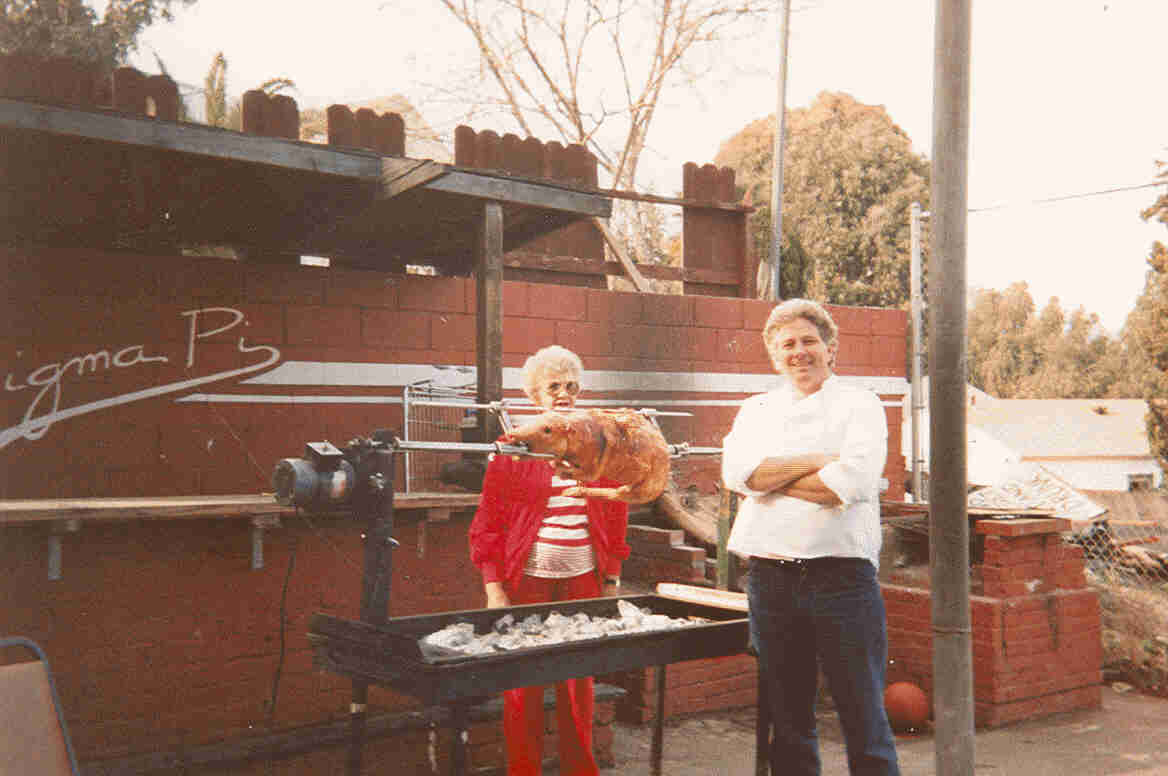
    Chef Jerry with his mother Lela Hughen, at a 1988 Luau in the backyard at Sigma Pi Manor.

    DECLO, Id. – Jerry Hughen, Upsilon’s chef from 1985 to 1990, died on Oct. 14 from pancreatic cancer, peacefully and surrounded by his family.

    Jerry moved to Idaho with his new wife, Rachel Hernandez, whom he met while living in Santa Barbara in the early 1990s. They had a new son, Jesse, to accompany Jerry’s two children, Matt and John, from his previous marriage. Rachel was divorced when they met, and Jerry was a light of inspiration.

    “One of the reasons I married him was because he made me laugh. I was recovering from a divorce, and didn’t have a lot to laugh about.”

    Rachel brought her two daughters to the new Brady Bunch-style marriage, and Jerry was happy to have an instant family with Rachel. “They were his princesses,” Rachel said.

    After leaving Upsilon, Jerry worked for various restaurants and for the school district in Santa Barbara. They decided to move to Idaho in 1996 because of the expense of living in Santa Barbara, and things like the Los Angeles riots. After a vacation to Idaho, they liked the slower, closer “Beaver Cleaver” lifestyle of the small town. Jerry’s outgoing and upbeat personality helped them to acclimate to the new community, and he got a new job “within hours” cooking at a restaurant in Twin Falls.

    In Declo, Jerry was active with his church and played in a Christian contemporary / country gospel band at county and state fairs in BASIC (Brothers and Sisters in Christ). Jerry had learned the guitar and played in a trio in Denver during his youth, and he revived his music skills. His friends and family best remember his love of music, which started in high school and continued to grow into the music ministry that he loved so much and shared with his wife, Rachel. >From playing for the local assisted living and long-term care patients, to his band, he reached people at fairs and events throughout southern Idaho, including Declo Days.

    With his new life with a focus on his church, Jerry remained fond of his days at UCLA and told his family stories of luaus and the brotherhood and a bit of “Animal House”. “He told us stories about the fraternity parties, and freezing vegetables for ammo to shoot at other houses in slingshots,” Rachel said.

    Jerry was born May 4, 1948, in Dyess, Ark., to George and Lela Hughen.  He grew up in Grand Junction, Colo., and graduated from Grand Junction High School in 1966. He served in the U.S.Air Force as a military policeman in North Africa and Southeast Asia from 1966 until 1972.  Jerry is survived by his
    wife, Rachel; his three sons,George, age 10; Jesse Hughen of Denver, Colo.; and John Audin of Clifton, Colo.; his grandson, Devyn, age 14; two stepdaughters, Sarah Warren of Rupert and Nadine VIramontes, of Concord, Calif.; two sisters, Nancy Koch of Twin Falls and Janet Vulk of Seattle,
    Wash.; six grandchildren; and many nieces and nephews.  Contributions may be made to Compassion International (compassion.com) in Jerry’s honor. His family can be contacted at 103 1st St. East, Declo, ID 83323 or(208) 654-4078.

  • Adytum: Remembrances of our Brothers

    Adytum: Remembrances of our Brothers

    Robert Thomas #244 (6/6/1918 – 1/28/2009): Thomas, a WWII veteran, Bruin wrestler / coach, and Golden Cross recipient, passed to the Adytum on High on Jan. 28, in San Marcos (San Diego Co.) at age 90.

    Thomas served in the U.S. Navy during World War II, and afterward embarked on an illustrious career as administrator of Rancho Los Amigos Hospital, a pre-eminent hospital for the disabled, and L.A. County/USC Medical Center.

    Thomas also was Vice President of Blue Cross of California, where he was able to touch so many lives. He was president of the California Hospital Assn. and a fellow with the American College of Hospital Administrators.

    “He was a great guy. He was a real go-getter. He was smart and someone who was always looking for a tough job,” his daughter Terri McFarren said.

    After retirement, Thomas traveled the world with his beloved wife Barbara, who preceded him in death in 1999, to Indonesia, Soviet Russia, and Communist China. He was an avid golfer at Lake San Marcos Country Club.

    Thomas moved to California at age 6, driving with his parents from Carthage, Missouri. The road through the desert was wood plansk and railroad ties, and travelers camped along the way. Thomas attended Fremont H.S. in Los Angeles. During WWII, Thomas succeeded Upsilon alumnus Briggs Hunt, who was drafted, as the Bruin “bonebenders” coach. During the summers, he hitchiked to Yellowstone Park. Thomas was later drafted and saw combat in North Africa, drove landing troop boats on D-Day in France and later in the Pacific. He was on the U.S.S. Missouri in Tokyo Bay when Japan surrendered to Gen. MacArthur. [Alumnus Fred Thornley was deployed in the bay on another ship.] After the war, Thomas received a Masters in Hospital Administration from Northwestern. Thomas is survived by his two daughters, son, and four grandchildren. His daughter Terri McFarren can be contacted at (858) 565-2025.

    Ltc. Raymond DeCamp #468 (9/13/1913 – 10/30/2009): DeCamp, the oldest living Upsilon alumnus, a WWII veteran, and Golden Cross recipient, passed to the Adytum on High on Oct. 30, 2009, in Los Angeles at age 96.

    He was a second-generation Californian and spent his entire life in the state. He was cremated and his remains scattered over the Pacific Ocean. One of his last friends in the fraternity was Kennie Gifford. His son, David DeCamp, graduated from Upsilon in 1968 and followed him into the entertainment industry and now works at Sony.

    DeCamp was a captain in the U.S. Army Corps of Engineers in Europe during WWII. He repaired bombing damage from German attackes on airfields in England and three days after D-Day, he was deployed in France. After discharge, he served in the Army Reserves for 20 years, retiring as a Lieutenant Colonel.

    DeCamp was raised during the Depression, and he dropped out of UCLA for a year to work, so he needed an extra year to graduate. He worked as a laborer at Warner Brothers Studio in 1936, and after he graduated, he began in the “still department” at Universal Studios. In 1955, he was promoted to the Directors Guild, and he worked as an Assistant Director in movies and television on Operation Petticoat, How the West Was Won, Twilight Zone, Peter Gunn and Mr. Lucky.

    DeCamp loved the action of the set, and when the studio wanted to promote him to Unit Manager, he turned them down. “He didn’t want to sit in an office for a couple hundred of bucks a week,” his son David said.

    DeCamp stayed active into his 80s, riding bicycles and walking every day. On Saturdays, he and his son watched UCLA football together. He continued to have weekly lunches with his industry friends. DeCamp was a product of the Depression, so he was thrifty and very organized.

    DeCamp’s son David DeCamp can be contacted: (818) 347-6883.

    Adytum

    Please remember the brothers who have passed to the Adytum on High in recent years:

    Arthur Williamson – 1952 #436 (2005, San Marino).

    Col. William Bennett – 1941 #254 (2005, Reva, Va.)

    A. Joseph Spielman – 1942 #265 (3/15/06, Kamuela, Haw.)

    Albert “Kennie” Gifford –  1935 #128 (12/6/06, Camarillo)

    Julian D’Avanzo 2007 (4/27/06, Oceanside)

    Robert Howe – 1952 #416 (9/10/06, Northridge)

    Paul Hastings – 1970 #712 (12/7/06, Boulder, Colo.)

    Wesley Terry – 1950 #311 (Ukiah)

    Leonard Eilers – 1953 #421 (6/29/06, Fair Oaks-Sacto)

    Alex West 1949 #386.

    William Sewell – 1950 #399  (1/2/07, Danville-S.F. Bay)

    James Ross – 1949 #342 (3/5/07, Fullerton)

    George Barlow – 1951 #390 (7/14/07, Monterey)

    Doug Bergen – 1950 #354 (6/2/07, La Jolla)

    Oscar Heselius – 1955 #476 (9/5/07).

    Claude Blakemore – 1932 #125 (11/24/06, San Diego).

    Joseph Marsalek – 1954 #428 (11/21/07, Arcadia).

    Richard Benner – 1940 #245 (11/07)

    Ray Carlisle – 1939 #199 (11/25/07).

    Thomas Reddy – 1958 #564 (12/11/07).

    John Selby – 1954 # 281 (8/1/07).

    Jay Van Holt – 1947 #369 (4/6/08).

    William Barnett – 1927 #41 (2009, Cardiff by the Sea)

    Merle Swanson – 1954 #339 (1/09, Carlsbad).

    Roger Denney – 1954 #468 (1/12/09, Irvine).

    Eugene Lica – 1940 #247 (1/20/09, Tarzana).

    Robert Thomas – 1940 #244 (1/28/09, San Marcos-S.Diego)

    Raymond DeCamp – 1936 #468 (10/30/09, Los Angeles)

  • Upsilon Heritage: Wedding bells for Lilly

    Upsilon Heritage: Wedding bells for Lilly

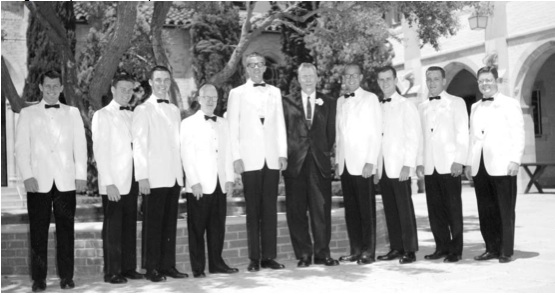
    David Lilly’s wedding day at St. Alban’s Church on Hilgard Ave. near the UCLA campus. Several brothers in picture: Mike Peterson, Chuck Bader, Dorsey Brady (Lilly’s “little brother”), father-in-law, David Lilly, Lilly’s father, Kent Lewis, Fred Jones, George Wagner (brother-in-law), and Alan Fitzgibbon (brother-in-law).

    lilly_wedding

  • UCLA vs Tenn

    UCLA vs Tenn

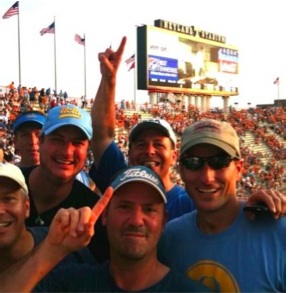
    tennTennessee game – Steve Lantz, Rob Ward and Jim Ballard cheer the Bruins onto victory! Other Upsilon brothers who traveled: Rich Marcus, Jay Ross, Tony Leadholm, Rick Leadholm (Tony’s dad), Mike McKenzie, Matt Bradley. Surprisingly few mullets – “Tennessee Top Hats.”

  • M.Swanson Family

    M.Swanson Family

    “I too am a UCLA grad.   Merle loved UCLA and all of his memories there.  We talked about UCLA every time we were together and especially towards the end of his life.

    He loved wearing his UCLA slippers. We always said “once a Bruin always a Bruin”.

    It would mean so much to him that you are taking the time to dedicate a tribute to him. It means so much to the family.

    Thank you for doing this very kind gesture. – Karen Swanson, daughter.

    “It’s very nice to hear that you will reserve a seat and have a moment of silence in his memory at your annual “Founders Day” alumni reunion/awards dinner.”

    – Doug Swanson, son.